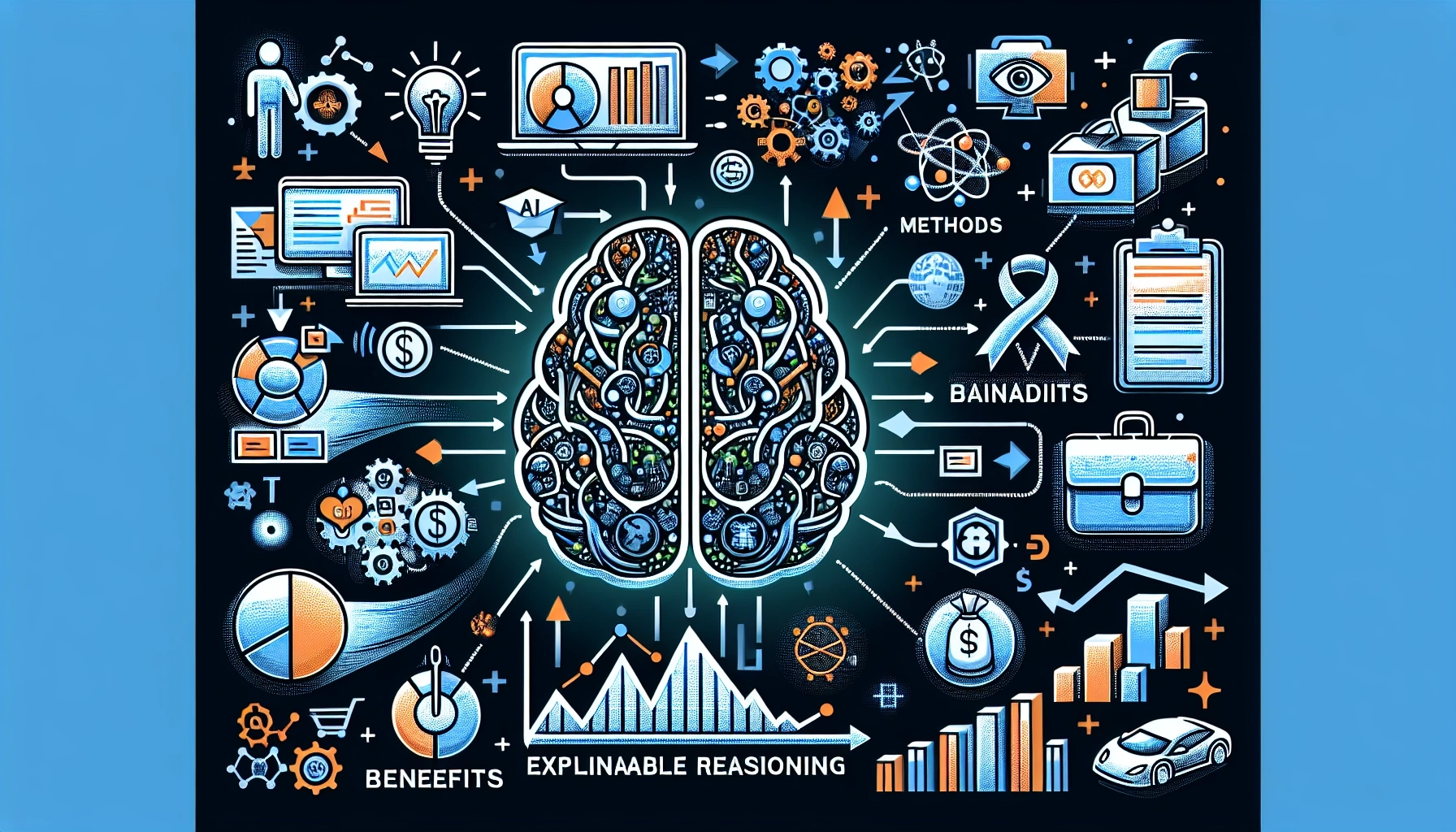
Explainable Reasoning AI: Methods, Benefits, and Real-World Applications
Understanding Explainable Reasoning AI
Explainable Reasoning AI refers to artificial intelligence systems designed not only to perform complex problem-solving tasks but also to provide clear, interpretable explanations for their decisions and reasoning processes. This transparency is crucial for fostering user trust, regulatory compliance, and improving AI’s integration into critical human-centered domains.
Key Methods in Explainable Reasoning AI
1. Rule-Based Systems and Expert Systems
One of the earliest approaches to explainable AI involves rule-based systems where logic and deduction rules are explicitly coded. These systems operate on “if-then” statements that humans can easily verify. Their traceable logic paths provide straightforward explanations, making them highly interpretable for domains like medical diagnosis and legal decision-making.
2. Symbolic Reasoning and Logic Programming
Symbolic reasoning leverages symbolic representations (e.g., predicate logic) to manipulate facts and draw conclusions. Logic programming languages like Prolog offer explainability by allowing the system’s knowledge base and inference chains to be inspected. This method excels in structured environments where data and rules are well-defined, providing detailed justification for AI conclusions.
3. Case-Based Reasoning (CBR)
CBR systems solve new problems by referencing similar past cases. The AI explains decisions by showing analogous cases and highlighting the differences or similarities influencing the current outcome. This method relies on storing high-quality prior cases and facilitates human-like reasoning patterns.
4. Model-Agnostic Explanation Techniques
These techniques work with any AI model, including opaque machine learning algorithms, providing transparency without altering the underlying system.
- LIME (Local Interpretable Model-agnostic Explanations): Generates locally faithful interpretable models that approximate complex model predictions to explain individual decisions.
- SHAP (SHapley Additive exPlanations): Uses game theory to attribute contribution scores to input features, clarifying their impact on model outcomes.
- Counterfactual Explanations: Focus on how minimal changes to inputs can alter AI decisions, helping users understand decision boundaries.
5. Neural Symbolic Reasoning
Combining neural networks with symbolic reasoning aims to harness deep learning’s pattern recognition power with the interpretability of symbolic logic. These hybrid approaches generate explanations through symbolic representations derived from neural embeddings, bridging the gap between raw data-driven models and transparent reasoning.
6. Causal Reasoning Models
Causal inference methods integrate cause-effect relations into AI systems, offering explanations rooted in causality rather than purely correlation. This allows AI to explain not only what decision was made but why it made sense in terms of underlying causal mechanisms.
Benefits of Explainable Reasoning AI
Enhanced Trust and User Adoption
Explainable AI builds confidence by demystifying “black-box” models. When users understand how AI reaches conclusions, they are more likely to rely on it, especially in high-stakes areas such as healthcare, finance, and law enforcement.
Regulatory Compliance and Ethical AI
Many regulations require AI systems to provide rationale for automated decisions — for instance, the GDPR mandates meaningful explanations for decisions impacting individuals. Explainable AI facilitates compliance, ensuring accountability and fairness in automated processes.
Improved Debugging and Model Refinement
Transparent reasoning enables AI developers to identify errors or biases in models by examining decision rationales. This leads to better model accuracy, robustness, and fairness during iterative improvements.
Facilitating Human-AI Collaboration
Explanation helps create a symbiotic relationship where humans and AI systems complement each other. Human experts can validate AI assessments, provide context, and intervene when necessary, leading to better overall decision-making.
Knowledge Discovery and Educational Value
AI systems that explain their reasoning contribute to knowledge discovery by uncovering patterns or rules previously unnoticed by humans. These insights can be educational and promote scientific advancement.
Real-World Applications of Explainable Reasoning AI
Healthcare and Medical Diagnosis
Explainable AI assists physicians in diagnosing diseases by not only predicting conditions but also explicating the reasoning behind each diagnosis based on patient data and medical guidelines. This transparency supports clinical decision-making, reduces diagnostic errors, and provides explainable treatment suggestions.
Financial Services and Fraud Detection
Banks and insurance companies use explainable reasoning AI to detect fraudulent transactions or assess credit risk. AI systems clarify which features (e.g., unusual spending patterns or credit history) led to a fraud alert or loan denial, ensuring transparency to regulators and customers.
Legal and Regulatory Compliance
Legal AI applications use explainable reasoning to analyze contracts, prior case law, and regulations. They provide explicit reasoning chains for recommendations or rulings, helping legal experts scrutinize AI’s outputs and ensuring decisions align with legal standards.
Autonomous Vehicles and Robotics
Explainable AI in autonomous driving shows operators the reasons behind navigation choices (e.g., obstacle avoidance, route selection). This transparency is critical for safety validation, troubleshooting, and gaining regulatory approval for self-driving technologies.
Customer Service and Chatbots
Reasoning AI embedded in chatbots or virtual assistants explains the rationale behind recommendations or actions taken on user queries. This improves user satisfaction and ensures transparency in automated customer service operations.
Manufacturing and Quality Control
AI systems in manufacturing use explainable reasoning to diagnose faults in production lines and suggest corrective actions. By explaining their conclusions in technical detail, these systems help engineers quickly understand and address issues.
Education and Personalized Learning
Explainable AI tutors provide students with feedback outlining the reasoning behind a given solution or grading outcome. This promotes deeper learning by making the thought process explicit and highlighting areas for improvement.
Key Challenges in Explainable Reasoning AI
Balancing Complexity with Interpretability
Achieving high performance often requires complex models, which are inherently less interpretable. Striking a balance between explanation fidelity and model accuracy remains a key challenge.
Context-Dependent Explanations
Different users require different levels of explanation detail depending on their expertise and needs. Designing adaptive explanation systems that personalize explanations accordingly is an ongoing research focus.
Handling Large-Scale, Unstructured Data
Reasoning over vast unstructured datasets (e.g., images, text) while maintaining explainability is difficult. Neural-symbolic approaches are promising, but integrating interpretability into deep learning remains complex.
Avoiding Explanation Biases
Poorly designed explanation models can mislead users or introduce biases. Careful validation of explanation methods is essential to ensure explanations are complete, truthful, and non-deceptive.
Emerging Trends in Explainable Reasoning AI
- Interactive Explanation Interfaces: AI-driven visualization tools and interactive dashboards empower users to explore reasoning pathways dynamically.
- Multimodal Explanations: Combining text, visuals, and symbolic logic explanations provides richer, more accessible understanding.
- Explainability in Reinforcement Learning: Developing transparent decision policies in agents learning through trial-and-error remains an exciting frontier.
- Explainable Federated Learning: Ensuring transparency in decentralized AI systems that protect privacy while combining distributed knowledge.
SEO Optimization for Explainable Reasoning AI Content
To optimize content for search engines, it is critical to incorporate relevant keywords strategically throughout the article. Here are top target keywords and phrases integrated naturally:
- Explainable Reasoning AI
- AI explainability methods
- Benefits of explainable AI
- Real-world AI applications
- AI transparency and trust
- Explainable machine learning
- Neural symbolic reasoning
- Model-agnostic explanation techniques
- AI in healthcare and finance
- Interpretable artificial intelligence
Using structured headings and bullet points enhances readability and SEO, while embedding long-tail keywords like “explainable AI in healthcare diagnosis” or “methods for AI transparency” aligns content with specific search intent.
By focusing on these aspects—methods, benefits, applications, challenges, and emerging trends—this detailed exploration offers a comprehensive view of explainable reasoning AI suited for both technical audiences and informed readers seeking trusted AI insights.