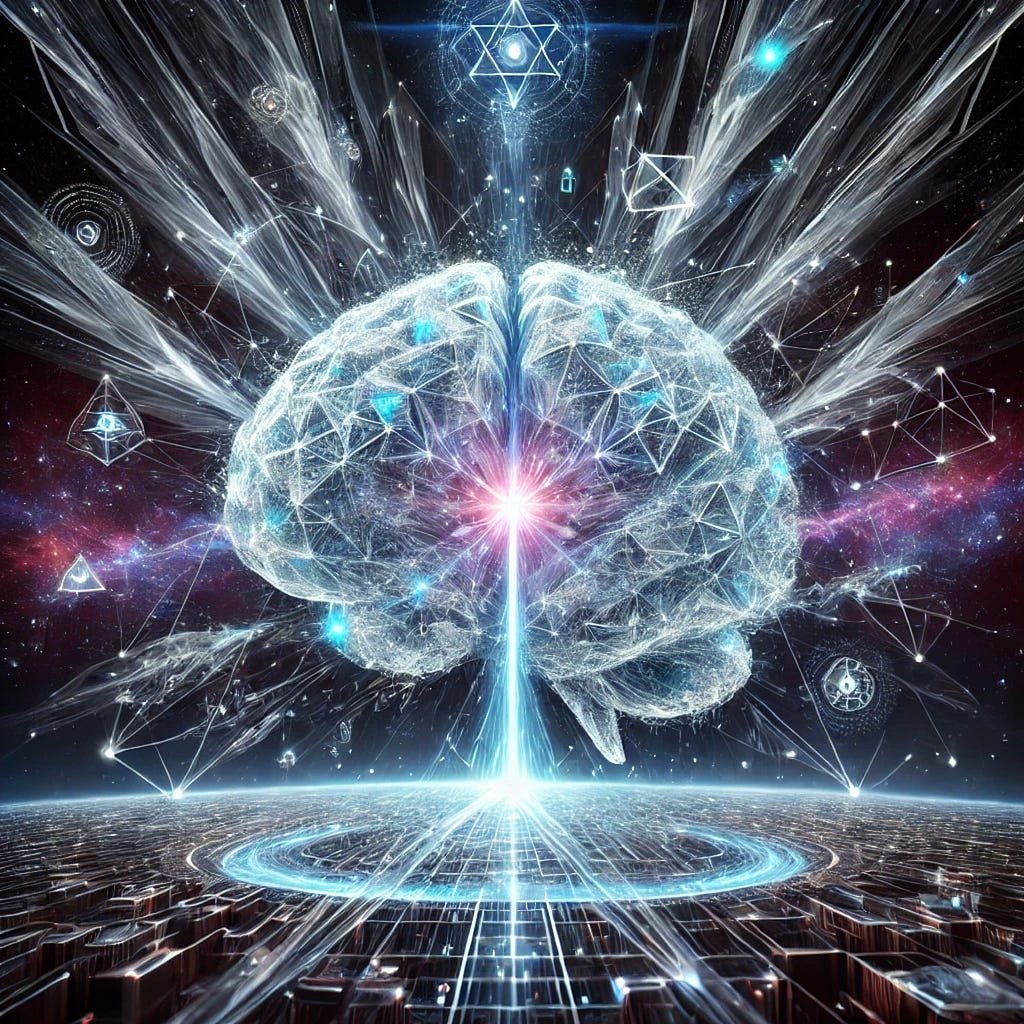
PlanckCore’s Fractal Simulation Engine
PlanckCore learns from and mirrors these principles. Our system:
🔁 1. Models Micro-Rules
Every system starts with atomic-level logic:
• Agents (users, investors, nodes, organisms)
• Rules (buy/sell, react/respond, bond/move)
• Inputs (environment, signals, rewards)
Each PlanckCore module uses tunable micro-rules across neural layers. These simple interactions simulate complex system behavior in social, economic, and biological contexts.
🧠 2. Stacks Neural Fractals
Unlike traditional networks, PlanckCore forms recursive fractals, where patterns within patterns interact to create deeply layered intelligence.
This allows us to:
• Predict chain reactions in economic models.
• Identify emergent catalysts in culture and media.
• Simulate the long-term evolution of digital ecosystems like HoloWorld.
🌐 3. Real-Time Multi-Domain Feedback
Emergent systems are dynamic — they respond and adapt in real time. PlanckCore absorbs constant feedback from:
• Market behavior
• Tokenomics
• User interactions
• Global news and sentiment
This keeps the simulation grounded in real-world context while projecting probable future states.


