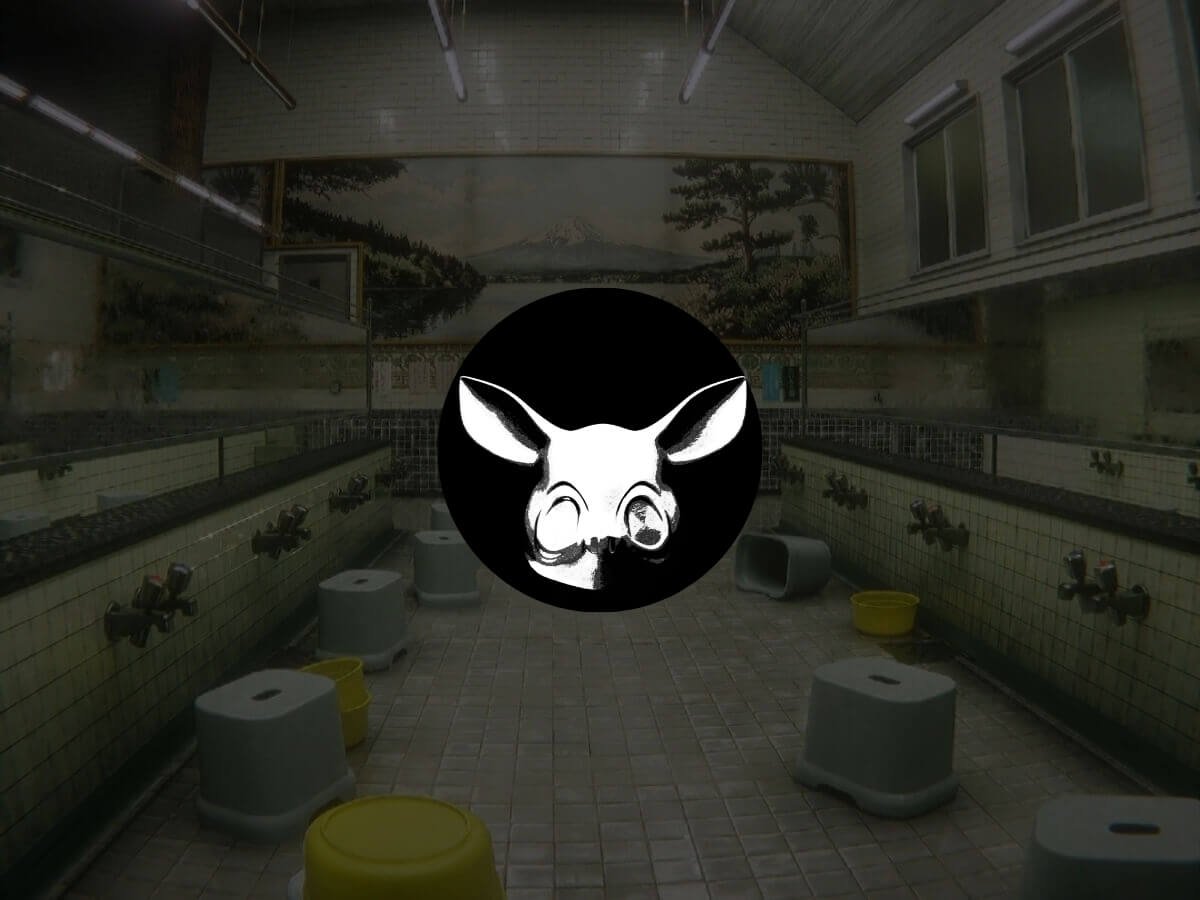
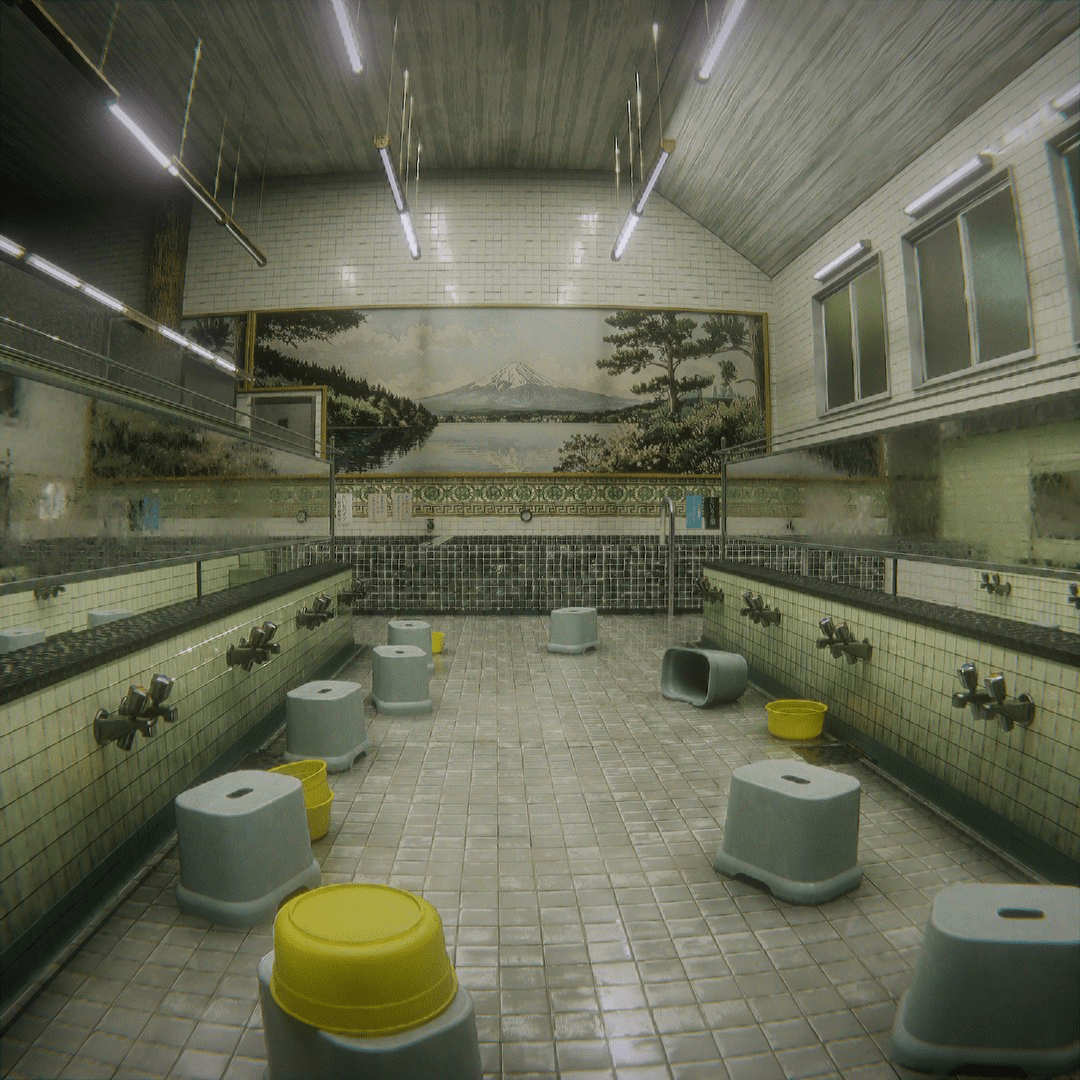
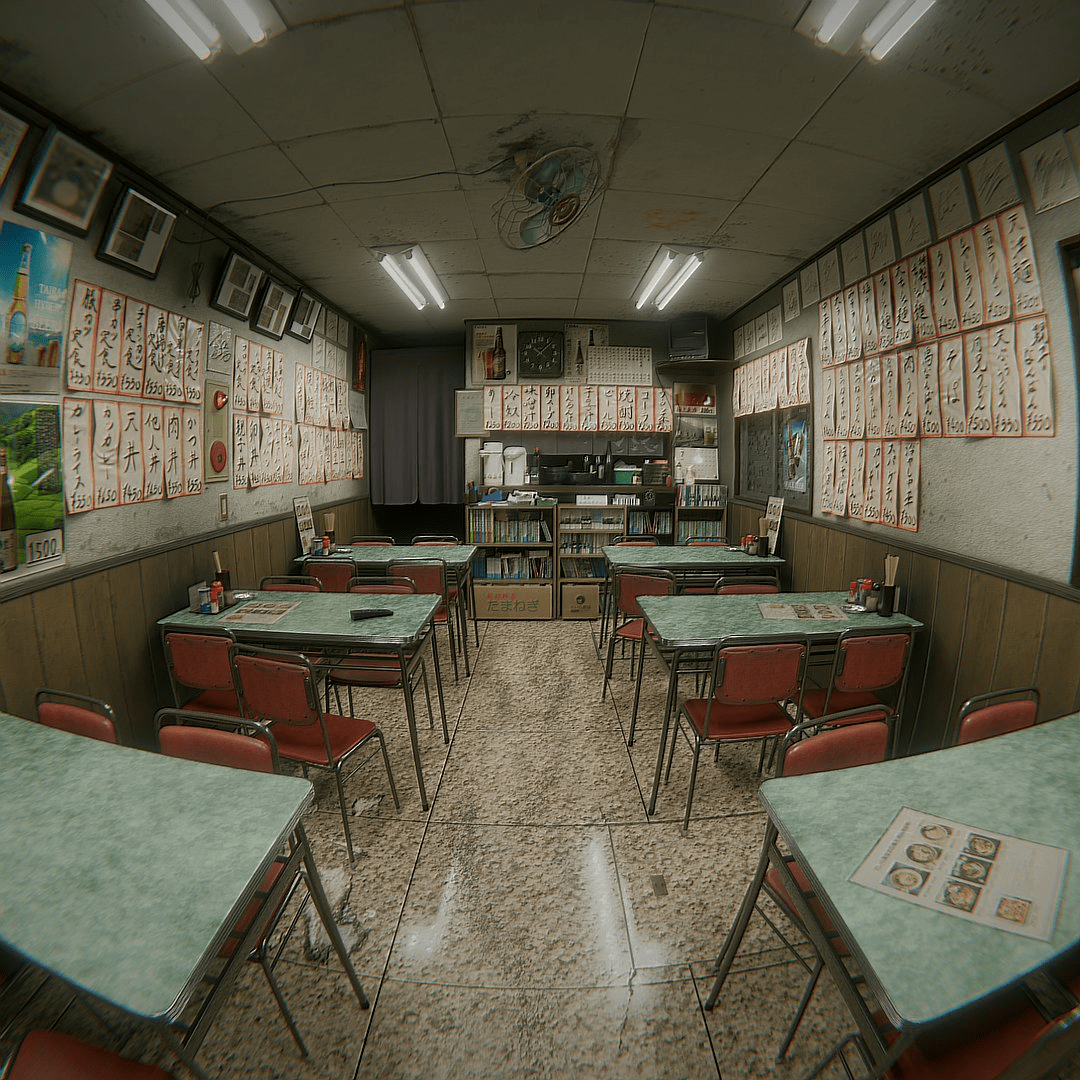
In the vast field of digital art, few creators manage to transform the familiar into something quietly unsettling as convincingly as Kakeru Taira. Working primarily in Blender, the self-taught Japanese artist has gained international attention for his meticulously crafted liminal spaces — laundromats, apartments, train stations, bookstores — places that feel both intimately real and strangely out of reach.
What makes his work remarkable is not only its technical precision but also the atmosphere it carries. These environments are steeped in silence and suggestion, capturing the in-between quality of spaces that are usually overlooked. They can feel nostalgic, eerie, or comforting, depending on the viewer — and that ambiguity is intentional. Taira resists defining his own works, believing that each person should encounter them freely, bringing their own memories, feelings, and interpretations.
For our community of designers and developers, his work offers both inspiration and insight: into craft, persistence, and the power of detail. In this conversation, I spoke with Taira about his journey into 3D, the challenges of mastering Blender, his thoughts on liminal spaces, and his perspective on where CGI art is headed.
For readers who may be discovering your work for the first time, how would you like to introduce yourself?
Nice to meet you. My name is Kakeru Taira. I use Blender to create CG works with the theme of “discomfort” and “eerieness” that lurk in everyday life. By adding a slight sense of distortion and unease to spaces that we would normally overlook, I aim to create works that stimulate the imagination of the viewer.
If someone only saw one of your works to understand who you are, which would you choose and why?
“An apartment where a man in his early twenties likely lives alone”
This work is set in a small apartment, a typical Japanese setting.
I think even first-time viewers will enjoy my work, as it captures the atmosphere of Japanese living spaces, the clutter of objects, and the sense that something is lurking.
You began with illustration before discovering Blender. What shifted in your way of thinking about space and composition when you moved into 3D?
When I was drawing illustrations, I didn’t draw backgrounds or spaces, and instead focused mainly on female characters. My main concern was “how to make a person look attractive” within a single picture.
However, since moving to 3DCG, I often don’t have a clear protagonist character. As a result, it has become necessary to draw the eye to the space itself and let the overall composition speak for the atmosphere.
As a result, I now spend more time on elements that I hadn’t previously paid much attention to, such as “where to place objects” and “what kind of atmosphere to create with lighting.” I think the “elements to make a person look impressive” that I developed when drawing characters has now evolved into “a perspective that makes the space speak like a person.”
When you spend long hours building a scene, how do you keep perspective on the overall atmosphere while working on small details?
When I work, I am always conscious of whether the scene feels “pleasant” when viewed from the camera’s point of view. In my work, I place particular emphasis on arranging objects so that the viewer’s gaze converges toward the center, and on symmetry to create a balance between the left and right sides, in order to tighten up the overall scene.
Your scenes often feel uncanny because of subtle details. Which kind of detail do you think has the greatest impact on atmosphere, even if most viewers might overlook it?
In my works, I believe that elements such as the overall color, camera shake, and the “converging lines that converge at the center of the screen” created by the placement of objects have a particularly large influence on the atmosphere.
Color dominates the impression of the entire space, while camera shake expresses the tension and desperation of the characters and the situation. By placing objects so that the viewer’s eyes naturally converge at the center, I devise a way for them to intuitively sense the overall atmosphere and eeriness of the scene, even if they are looking absentmindedly.
Many of your works depict ordinary Japanese places. In your opinion, what makes these overlooked everyday spaces such powerful subjects for digital art?
My works are set in ordinary Japanese spaces that are usually overlooked and no one pays any attention to them. It is precisely because they are overlooked that with just a little modification they have the power to create a different atmosphere and an extraordinary impression. I believe that by bringing out the subtle incongruity and atmosphere that lurks in the everyday through light, color and the placement of objects, it is possible to create a strong and memorable expression even in ordinary places.
People outside Japan often feel nostalgia in your works, even if they’ve never experienced those locations. Why do you think these atmospheres can feel universally familiar?
I believe the reason why people outside of Japan feel a sense of nostalgia when they see my works, even in places they’ve never been to, is largely due to the concept of “liminal space,” which has become a hot topic online. One thing my works have in common with liminal space is that, despite the fact that they are spaces where people are meant to come and go and be used, no people are visible on screen. At the same time, however, traces of people’s past, such as the scrapes on the floor and the presence of placed objects, float about, evoking a faint sense of life amid the silence.
I believe that this “coexistence of absence and traces” stimulates memories that lie deep within the hearts of people of all countries. Even in places that have never been visited, an atmosphere that everyone has experienced at least once is evoked—a universal feeling that perhaps connects to nostalgia and familiarity.
You’ve said you don’t want to define your works, leaving each viewer free to imagine. Why do you feel that openness is especially important in today’s fast, online culture?
I believe that prioritizing speed alone would limit the expression I truly want to do, putting the cart before the horse. Of course, I want my work to reach as many people as possible, but I think what’s more important is to “first give form to the video I truly want to make.”
On top of that, by leaving room for viewers to freely interpret it, I believe my work will not be bound by the times or trends, and will continue to have new meanings for each person. That’s why I feel there is value in being intentionally open, even in today’s fast-paced online culture.
Working for weeks on a single piece requires persistence. What do you tell yourself in the moments when motivation is low?
I love my own work, so my biggest motivation is the desire to see the finished product as soon as possible. Sometimes my motivation drops along the way, but each time that happens I tell myself that it will be interesting once it’s finished, and that I’ll be its first audience, and that helps me move forward.
Creating something is a difficult process, but imagining the finished product naturally lifts my spirits, and I think that’s what allows me to persevere.
Recently, you’ve shared works where you used Adobe Firefly to generate textures and experiment with new elements. How do you see AI fitting into your creative workflow alongside Blender?
For me, using AI feels “similar to outsourcing”. For example, I leave detailed work that CG artists aren’t necessarily good at, such as creating textures for product packaging, to AI, as if I were asking a specialized artist. This allows me to focus on core aspects like composition and spatial design, which improves the overall finish and speed of the work.
By combining modeling in Blender with assistance from AI, I can utilize the strengths of each to advance production, which is of great significance to my current workflow.
Note: At Kakeru’s request, we’d like to clarify that Adobe Firefly’s learning data is based solely on Adobe Stock and copyright-free content. The tool was developed with copyright considerations in mind to ensure safe use. He asked us to share this so readers can better understand how Firefly is positioned in his workflow.
You’ve mentioned that AI can speed up some tasks, like texture creation. In your view, which parts of your process should be efficient, and which should remain slow and deliberate?
I can’t leave the core parts, such as designing the composition or developing the entire work, to AI, as these are the most important elements that reflect my own sense and narrative. On the other hand, I feel that processes such as creating textures and considering variations can be made more efficient by using AI.
In other words, I value drawing the line between “taking my time carefully to decide the direction and atmosphere of the work” and “having AI help with repetitive tasks and auxiliary parts.” I believe that by being conscious of the balance between efficiency and deliberation, I can take advantage of the convenience of AI while also protecting the originality of my own expression.
Some artists worry AI reduces originality. How do you approach using AI in a way that still keeps your signature atmosphere intact?
I use AI solely as a “tool to assist my creation,” and I always make sure to come up with the core story and atmosphere of my work myself. If I become too dependent on AI, I won’t be able to truly say that my work is my own. Ultimately, humans are the main actors, and AI merely exists to make work more efficient and provide opportunities to draw out new ideas.
For this reason, during the production process, I am always conscious of “at what stage and to what extent should I borrow the power of AI?” By prioritizing my own sense and expression while incorporating the strengths of AI in moderation, I believe I can expand the possibilities of new expression while retaining my own unique atmosphere in my work.
Outside of Blender, are there experiences — in film, architecture, music, or daily routines — that you feel shape the way you design your environments?
I am particularly drawn to the works of directors Yasujiro Ozu and Stanley Kubrick, where you can sense their passion for backgrounds and spatial design. Both directors have a very unique way of perceiving space, and even cutting out a portion of the screen has a sense of tension and beauty that makes it stand out as a “picture.” I have been greatly influenced by their approach, and in my own creations I aim to create “spaces that can be appreciated like a painting,” rather than just backgrounds.
By incorporating the awareness of space I have learned from film works into my own CG expressions, I hope to be able to create a mysterious sense of depth and atmosphere even in everyday scenes.
If you were giving advice to someone just starting with Blender, what would you say that goes beyond technical skill — about patience, mindset, or approach?
One of Blender’s biggest strengths is that, unlike other CG software, it is free to start using. There are countless tutorials on YouTube, so you can learn at your own pace without spending money on training or learning. And the more you create, the more models you accumulate as your own assets, which can be motivating when you look back and see how much you’ve grown.
Furthermore, when continuing your learning journey, it is important to adopt a patient and persistent attitude. At first, things may not go as planned, but the process of trial and error itself is valuable experience. Once you have completed a project, I also recommend sharing it on social media. Due to the influence of algorithms, it is difficult to predict which works will gain attention on social media today. Even a small challenge can catch the eye of many people and lead to unexpected connections or recognition. I hope that this content will be of some assistance to your creative endeavors.
Step Into Kakeru’s Spaces
Thank you, Kakeru, for sharing your journey and insights with us!
Your ability to turn everyday spaces into something quietly profound reminds us of the power of detail, patience, and imagination in creative work. For those curious to experience his atmospheres firsthand, we invite you to explore Kakeru Taira’s works — they are pieces of digital art that blur the line between the familiar and the uncanny, and that might just stir memories you didn’t know you carried.
Explore more of his works on X (Twitter), Instagram, TikTok and Youtube.
I hope you found this interview inspiring. Which artist should I interview next? Let me know 🙂