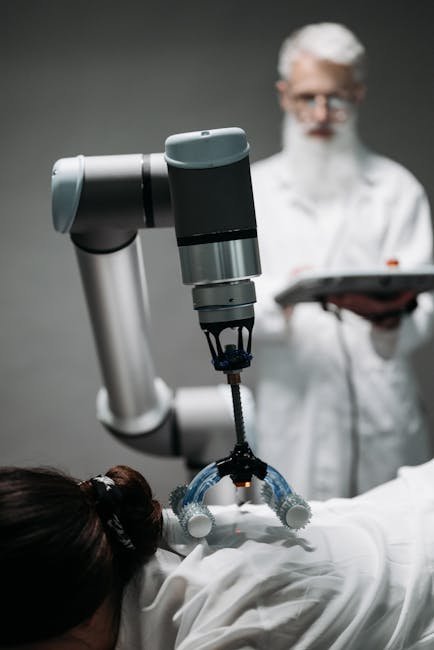
AI-Powered Diagnostics: A New Era in Healthcare Vision
The field of diagnostics is undergoing a seismic shift, propelled by the rapid advancements in artificial intelligence (AI). This transformative technology promises to revolutionize how diseases are detected, diagnosed, and treated, ushering in an era of unprecedented accuracy, speed, and personalized healthcare. From analyzing medical images to interpreting complex genomic data, AI is empowering clinicians with enhanced insights, ultimately leading to improved patient outcomes and a more efficient healthcare system.
The Rise of AI in Medical Imaging:
Medical imaging forms the cornerstone of modern diagnostics. Techniques like X-rays, CT scans, MRIs, and ultrasounds provide invaluable visual representations of the body’s internal structures, allowing clinicians to identify abnormalities and diagnose a wide range of conditions. However, interpreting these images can be time-consuming, subjective, and prone to human error. AI algorithms, particularly those based on deep learning, are proving to be remarkably adept at analyzing medical images, surpassing human capabilities in certain areas.
Deep Learning for Enhanced Detection:
Deep learning models, trained on vast datasets of medical images, can learn to identify subtle patterns and anomalies that might be missed by the human eye. For example, AI algorithms can detect minute tumors in lung CT scans with higher sensitivity than radiologists, enabling earlier diagnosis and treatment of lung cancer. Similarly, AI can assist in the diagnosis of breast cancer by analyzing mammograms and identifying suspicious lesions with greater accuracy, reducing the need for unnecessary biopsies.
Beyond Detection: Quantifying and Characterizing Disease:
AI’s capabilities extend beyond simply detecting the presence of disease. These algorithms can also quantify the extent and severity of the disease, providing clinicians with more detailed information for treatment planning. In the context of neuroimaging, AI can automatically segment brain structures, quantify brain atrophy, and identify biomarkers associated with Alzheimer’s disease, facilitating earlier diagnosis and monitoring of disease progression. Furthermore, AI can analyze the texture and shape of lesions in medical images, providing insights into the underlying pathology and helping to differentiate between benign and malignant conditions.
AI-Powered Pathology: Transforming Tissue Analysis:
Traditional pathology relies on the microscopic examination of tissue samples to diagnose diseases like cancer. Pathologists meticulously analyze stained tissue slides to identify cellular abnormalities and determine the stage and grade of the disease. This process is labor-intensive, subjective, and can be subject to inter-observer variability. AI-powered pathology is transforming this field by automating many of the tasks performed by pathologists, improving accuracy, and reducing turnaround times.
Automated Image Analysis for Pathology:
AI algorithms can analyze whole-slide images of tissue samples, identifying cancerous cells, quantifying biomarkers, and classifying tumors with remarkable accuracy. These algorithms can also assist in the identification of specific mutations and other genetic alterations, providing valuable information for personalized cancer treatment. By automating routine tasks, AI frees up pathologists to focus on more complex cases, ultimately improving the quality of patient care.
Genomics and AI: Unlocking the Secrets of the Genome:
Genomic sequencing has revolutionized our understanding of disease, providing insights into the genetic basis of various conditions. However, analyzing the vast amounts of data generated by genomic sequencing is a daunting task. AI algorithms are proving to be invaluable in this area, helping to identify disease-causing genes, predict drug response, and personalize treatment strategies.
Identifying Disease-Causing Genes:
AI can analyze genomic data to identify rare mutations and other genetic alterations that are associated with specific diseases. By comparing the genomes of patients with and without a particular disease, AI algorithms can pinpoint the genes that are most likely to be involved. This information can be used to develop new diagnostic tests and targeted therapies.
Predicting Drug Response and Personalizing Treatment:
AI can also be used to predict how a patient will respond to a particular drug based on their genetic profile. This allows clinicians to personalize treatment strategies, ensuring that patients receive the most effective therapy while minimizing the risk of side effects. For example, AI can predict which patients with cancer are most likely to benefit from immunotherapy based on the expression of certain genes.
AI in Early Disease Detection and Prevention:
The potential of AI extends beyond diagnosing existing diseases. It also holds immense promise for early disease detection and prevention. By analyzing various types of data, including medical images, genomic data, and wearable sensor data, AI can identify individuals who are at high risk for developing certain conditions, allowing for proactive interventions to prevent disease onset or slow its progression.
Predictive Analytics for Risk Stratification:
AI algorithms can be trained to identify individuals who are at high risk for developing diseases like diabetes, heart disease, and Alzheimer’s disease. These algorithms can analyze factors such as age, family history, lifestyle habits, and genetic predispositions to generate a risk score for each individual. Individuals identified as being at high risk can then be targeted for preventative interventions, such as lifestyle modifications, medication, and regular screening.
Continuous Monitoring with Wearable Sensors:
Wearable sensors, such as smartwatches and fitness trackers, can continuously monitor various physiological parameters, including heart rate, blood pressure, and activity levels. AI algorithms can analyze this data to detect subtle changes that may indicate the onset of disease. For example, AI can detect irregular heart rhythms that may be indicative of atrial fibrillation, allowing for early diagnosis and treatment to prevent stroke.
Challenges and Considerations for AI in Diagnostics:
While the potential of AI in diagnostics is undeniable, there are also several challenges and considerations that must be addressed to ensure its safe and effective implementation.
Data Bias and Generalizability:
AI algorithms are only as good as the data they are trained on. If the training data is biased, the AI algorithm will also be biased, leading to inaccurate results and potentially unfair outcomes for certain patient populations. It is crucial to ensure that training datasets are diverse and representative of the populations that the AI algorithm will be used on. Furthermore, AI algorithms should be rigorously validated on independent datasets to assess their generalizability across different populations and settings.
Explainability and Transparency:
Many AI algorithms, particularly those based on deep learning, are “black boxes,” meaning that it is difficult to understand how they arrive at their conclusions. This lack of explainability can make it difficult for clinicians to trust the results of AI algorithms and can hinder their ability to interpret and act upon the information provided. Efforts are being made to develop more explainable AI algorithms that provide insights into their reasoning process, allowing clinicians to understand how they arrived at a particular diagnosis or prediction.
Regulatory Frameworks and Ethical Considerations:
The use of AI in diagnostics raises several ethical considerations, including patient privacy, data security, and the potential for algorithmic bias. Clear regulatory frameworks are needed to ensure that AI algorithms are used responsibly and ethically. These frameworks should address issues such as data privacy, data security, informed consent, and liability.
The Future of AI in Diagnostics:
AI is poised to play an increasingly important role in the future of diagnostics. As AI algorithms become more sophisticated and data becomes more readily available, AI will be used to diagnose diseases earlier, more accurately, and more efficiently. AI will also be used to personalize treatment strategies, predict drug response, and develop new diagnostic tests and therapies. The convergence of AI, genomics, and wearable sensor technology holds immense promise for transforming healthcare and improving patient outcomes. The vision of a future where AI empowers clinicians with enhanced insights, leading to earlier diagnosis, personalized treatment, and improved prevention, is rapidly becoming a reality.